If you have been running a physical business in the Philippines for ten, twenty, or thirty years, you know the rhythm of traditional retail. Whether you operate an auto parts supply shop in Banawe, a wholesale hardware store in Binondo, or a family-owned bakery chain in Laguna, your revenue has historically relied on three things: location, foot traffic, and word-of-mouth reputation.
For decades, that formula was rock solid. But over the last few years, the way Filipinos buy has fundamentally shifted. Even long-standing corporate clients and loyal neighborhood buyers now start their buying journey on a screen before they ever step foot inside a store or place an order over the phone.
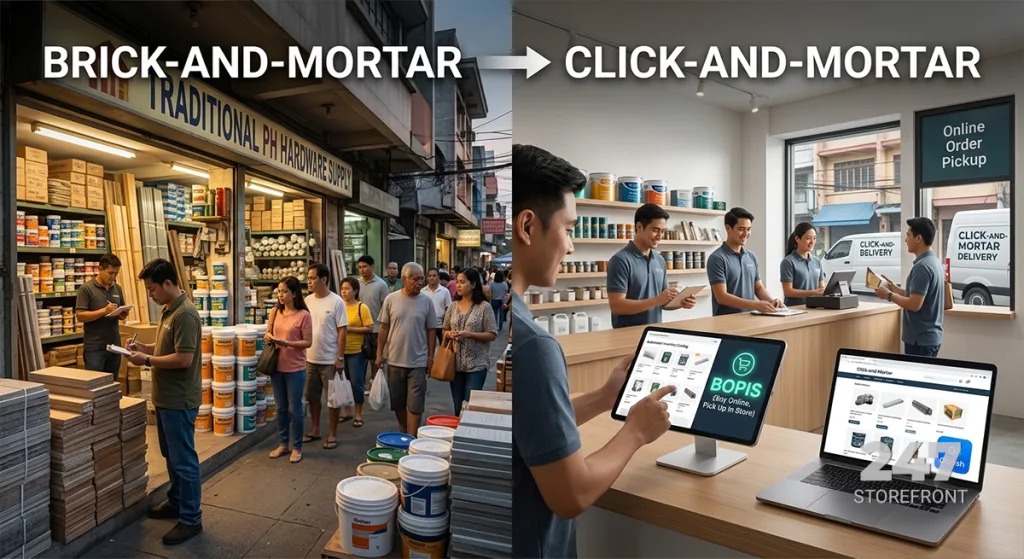
Moving from a purely physical operation (brick-and-mortar) to a hybrid model (click-and-mortar) does not mean abandoning your physical location. Instead, it means using a custom website to turn your existing store into a 24/7 sales engine. Over the years, I’ve helped dozens of traditional business owners make this shift without disrupting their day-to-day operations. Here is a practical roadmap for doing it right.
What Exactly Is a “Click-and-Mortar” Strategy?
A click-and-mortar strategy integrates your physical storefront, warehouse, or showroom with an online web presence. Rather than treating your online store as a completely separate business, your website becomes a direct extension of your physical counter.
Many traditional Filipino enterprise owners assume going online means competing directly with massive marketplaces like Shopee or Lazada. That is a misunderstanding. A dedicated business website serves a very different purpose:
- B2B and Bulk Ordering: Commercial buyers, contractors, and corporate clients prefer purchasing through official, branded channels where they can request official receipts, volume quotes, and credit terms.
- Hybrid Shopping Experiences: Customers can research your catalog online, check real-time stock availability, and choose to pick up their items at your physical store (BOPIS: Buy Online, Pick Up In Store).
- Brand Authority: Having a dedicated domain builds long-term equity for your brand name rather than renting space inside a noisy online marketplace.
Step 1: Inventory Synchronization—The Hardest Operational Hurdle
In my experience, the single biggest headache for traditional enterprises making the digital jump isn’t designing the website—it is managing inventory. If a customer buys your last remaining hydraulic pump or box of tiles on your website while a walk-in customer buys the same item at your physical counter, you have an embarrassing operational failure.
To avoid stock discrepancies, traditional businesses must choose one of two approaches:
1. Integrated POS/ERP System
If your physical store uses a modern Point of Sale (POS) or Enterprise Resource Planning (ERP) system, your web developer can connect your website’s database directly to your inventory management system via API. When a sale happens in-store, online stock levels update automatically within seconds.
2. Allocated Online Stock (The Safer Starting Point)
If you still use legacy software or paper-based ledger tracking at your counter, don’t try to sync everything at once. Set aside a specific portion of your physical warehouse inventory exclusively for online orders. Once your team gets comfortable fulfilling web orders, you can invest in a fully connected system.
Step 2: Adapting Local Payment and Invoicing Workflows
Traditional enterprise clients in the Philippines rely heavily on specific financial workflows: official BIR receipts, purchase orders (POs), and flexible payment options. Your website needs to accommodate these realities rather than forcing a rigid consumer-only checkout.
A complete click-and-mortar site for local businesses should support:
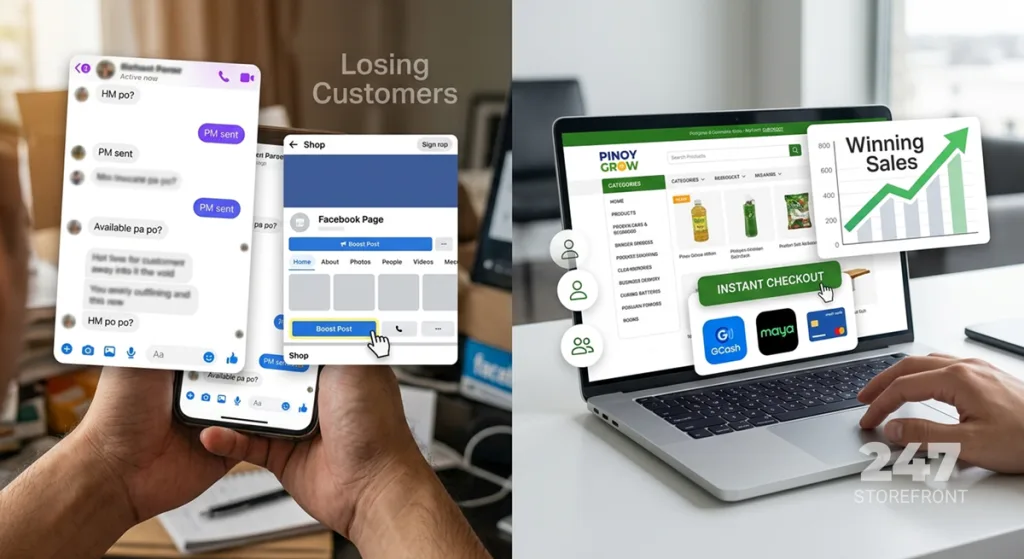
- Automated Digital Payments: Integrating systems via PayMongo or Maya Business allows retail customers to pay immediately using GCash, Maya, or local credit cards.
- Corporate Account Checkouts: Allow verified B2B buyers to select “Pay via Purchase Order” or “Bank Transfer,” upload their formal PO document directly at checkout, and receive a automated pro-forma invoice.
- BIR Compliance: Ensure your checkout captures necessary tax details, such as the registered Tax Identification Number (TIN) and official business name, so your billing department can issue valid official receipts smoothly.
Step 3: Bridging Physical Logistics and Local Couriers
Shipping physical goods across the Philippine archipelago comes with unique geographical and infrastructural challenges. A solid website setup accounts for both local sameday deliveries and provincial freight.
To provide a seamless customer experience, implement a multi-tiered shipping setup at checkout:
| Customer Type | Preferred Logistics Options | Operational Requirement |
|---|---|---|
| Local Metro Buyers | On-demand couriers (Lalamove, GrabExpress) or store pickup. | Real-time dispatch from your physical store or warehouse counter. |
| Provincial Retail Buyers | Standard nationwide couriers (J&T Express, LBC). | Automated tracking numbers emailed upon dispatch. |
| Bulk & Commercial Clients | In-house delivery trucks or specialized cargo forwarders (AP Cargo, Waybill). | Manual shipping quote calculation based on weight, volume, and destination. |
Offering a “Store Pickup” option on your website is particularly powerful in dense urban areas like Metro Manila, Metro Cebu, or Davao, where customers often prefer picking up orders themselves to bypass traffic delays or courier fees.
Step 4: Leveraging Local Search to Drive Foot Traffic
One of the greatest advantages a click-and-mortar store has over purely digital businesses is physical presence. You can use your website to dominate local search results and drive more foot traffic directly to your brick-and-mortar location.
By executing targeted local SEO strategies, your website acts as a beacon for nearby shoppers. Make sure your developer embeds interactive Google Maps on your location pages, optimizes your site for location-specific search terms (e.g., “industrial hardware supplier in Pasig”), and syncs your site data with your official Google Business Profile.
When nearby prospects search on their mobile phones for products you carry, a well-optimized site ensures your physical address, business hours, stock levels, and phone numbers appear at the very top of Google results.
3 Expensive Mistakes Traditional Businesses Must Avoid
Transitioning an established business online comes with hurdles. Over the last 15 years, these are the three most common traps I have seen traditional business owners fall into:
- Treating the Website as an IT Project Instead of a Sales Channel: Handing your web project entirely to your internal IT department often results in a site that is technically sound but terrible at selling. Your sales and marketing teams must lead the user interface and content decisions.
- Failing to Train Counter Staff: If your physical store staff views the website as competition for their sales commissions or as an unnecessary burden, they will ignore online pickup orders. Train your team to see the website as a tool that makes their job easier by pre-qualifying leads.
- Neglecting Mobile Optimization: Traditional owners often inspect their new website on a desktop computer in their private office. However, over 70% of your customers will view it on a smartphone. Always review the mobile version first to ensure fast load times and clean navigation.
How to Calculate Your ROI on a Website Build
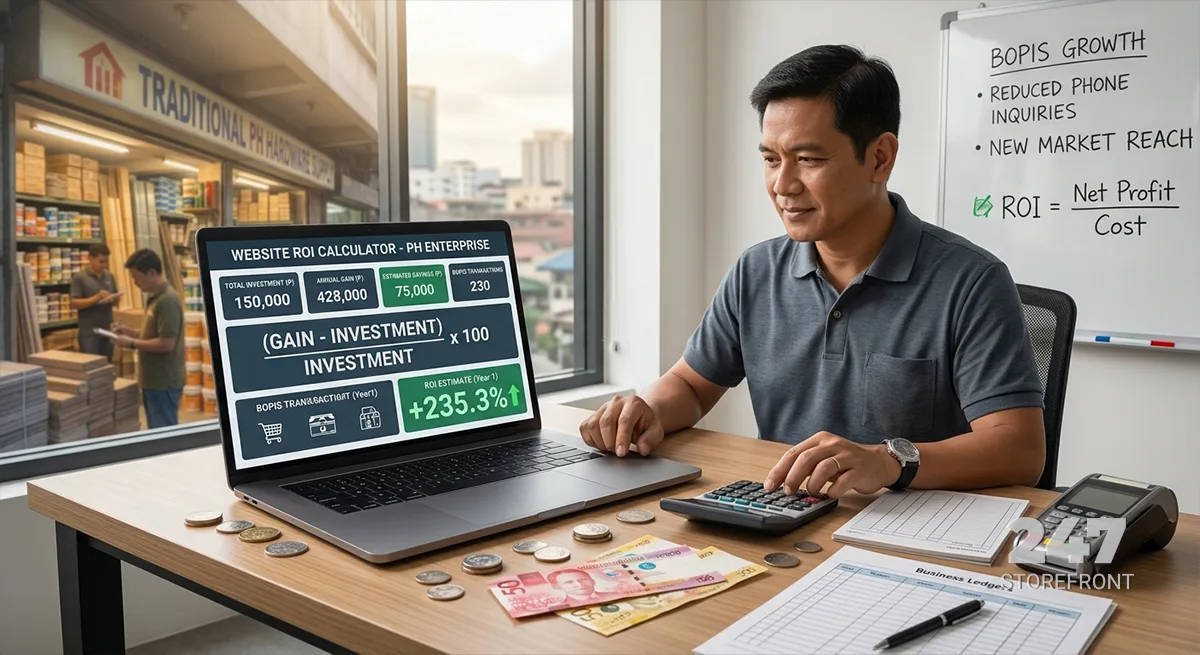
Traditional business owners are naturally disciplined about capital expenditure. Before investing ₱80,000 to ₱250,000 into a custom website, calculate the return on investment based on operational savings and incremental sales.
Consider the staff hours spent manually answering repetitive phone calls about pricing, product specifications, or store locations. A comprehensive online catalog cuts those inquiry calls significantly, freeing your team to focus on high-value sales negotiation. Add in the extra revenue generated from after-hours orders and provincial buyers you could never reach through your physical storefront alone, and a well-built website typically pays for itself within 3 to 6 months.
Final Thoughts
Your physical store’s history, local reputation, and tangible inventory are massive assets. Transitioning to a click-and-mortar model does not mean starting over from scratch; it means giving your existing business the digital storefront it needs to stay competitive for the next 20 years.
Take it step by step. Start by digitizing your core catalog, establishing secure local payment methods, and setting clear fulfillment rules. By connecting your physical store to an official website, you create a seamless buying experience that keeps long-time customers loyal while bringing new buyers through your door every day.
Frequently Asked Questions
What is the difference between brick-and-mortar and click-and-mortar?
Brick-and-mortar refers to a traditional business that operates exclusively out of physical buildings (stores, warehouses, showrooms). Click-and-mortar refers to a hybrid model where the business operates both a physical store and an integrated e-commerce website.
How much does it cost to transition a traditional business online in the Philippines?
For a traditional enterprise needing inventory integration, customized B2B features, and local payment gateways, a semi-custom or custom corporate site typically ranges from ₱80,000 to ₱250,000 depending on project scope.
Can we integrate our existing POS system with a custom website?
Yes. Most modern cloud-based POS and ERP systems offer API documentation that allows web developers to sync stock levels, customer data, and sales orders between your physical store and website automatically.
How do we handle official receipts (OR) for online orders?
You can capture required BIR billing details (such as TIN and registered business name) during the website checkout process. Your accounting team can then generate and issue the physical or digital Official Receipt alongside the shipped goods.
Should traditional businesses sell on marketplaces or build their own website?
While marketplaces like Shopee or Lazada can provide quick consumer exposure, a dedicated website allows traditional enterprises to establish brand authority, control customer data, cater to B2B clients, and avoid high platform commission fees.