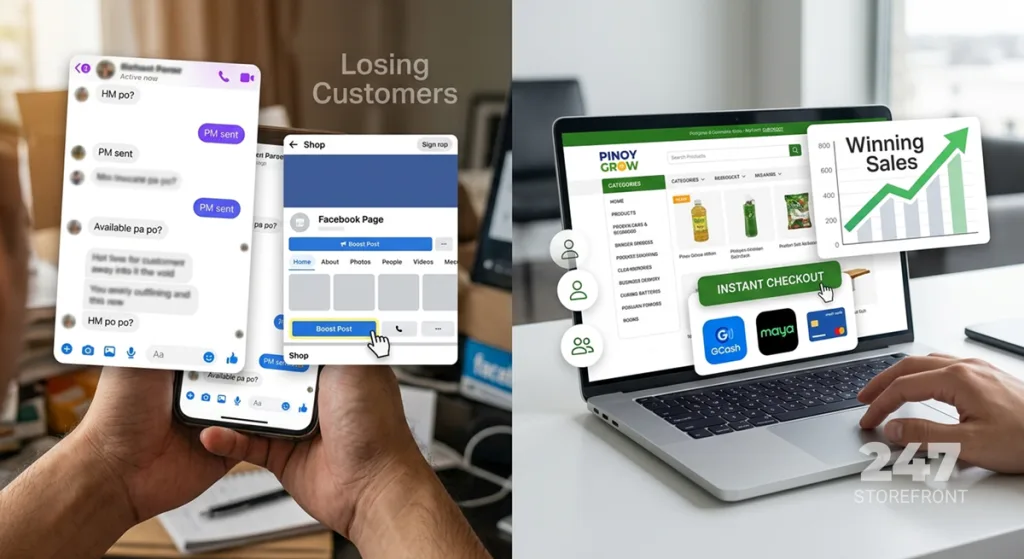
Filipino consumers have fundamentally changed how they spend their money online. A few years ago, setting up a basic Facebook page, posting a few photos, and replying with “PM sent” was enough to run a profitable online store. Today, that approach is a fast track to losing high-value customers.
After 15 years of building e-commerce platforms and digital strategies for local businesses, I have watched this behavioral shift happen in real-time. Buyers have grown sophisticated, but they have also grown highly skeptical. They have been burned by fake sellers, ghosting couriers, and products that look nothing like the promotional photos. Before they transfer a single peso, they are actively looking for signals that your business is legitimate.
If you are wondering why your social media inquiries aren’t converting into actual sales, the answer usually comes down to one thing: a lack of verifiable trust. Here is why modern Filipino shoppers strongly prefer—and often demand—to buy from brands with official websites.
The Credibility Gap: Why Social Media Isn’t Enough
When your entire business lives on a free social media profile, you are asking customers to take a massive leap of faith. Anyone can create a page in five minutes, download product photos from the internet, and disappear after collecting payments.
The numbers back this up. Roughly 54.5% of Philippine online shoppers are worried they will not receive what they actually paid for. That is a staggering trust deficit for any business trying to scale. Furthermore, 59% of e-commerce searches are non-branded, meaning buyers are looking for solutions they can trust rather than specific labels.
An official website instantly bridges this credibility gap. It proves to the market that you have invested real capital into your digital infrastructure. When you move beyond a basic Facebook page, you stop looking like a permanent, reliable enterprise.
The Anatomy of a Trustworthy Philippine Website
What exactly makes a website look legitimate to a local buyer? It is not just about having a pretty design. It comes down to functionality, security, and transparency.
- Official Custom Domains: A professional
.comor.com.phdomain shows that you legally own your brand name on the internet. - Transparent Policies: Clearly published return, refund, and shipping policies lower buying anxiety by telling the customer exactly what happens if something goes wrong.
- Verified Customer Reviews: About 65% of Filipino shoppers refuse to buy a product that has zero feedback or reviews. A dedicated website allows you to host and verify these reviews properly, showing that real people have successfully bought from you.
- Secure Payment Gateways: Moving away from manual bank deposits to integrated systems builds immense trust. For example, 97% of e-shoppers in the country have used GCash recently. When you accept GCash and Maya automatically on your website, you provide the secure, frictionless checkout experience that modern consumers expect.
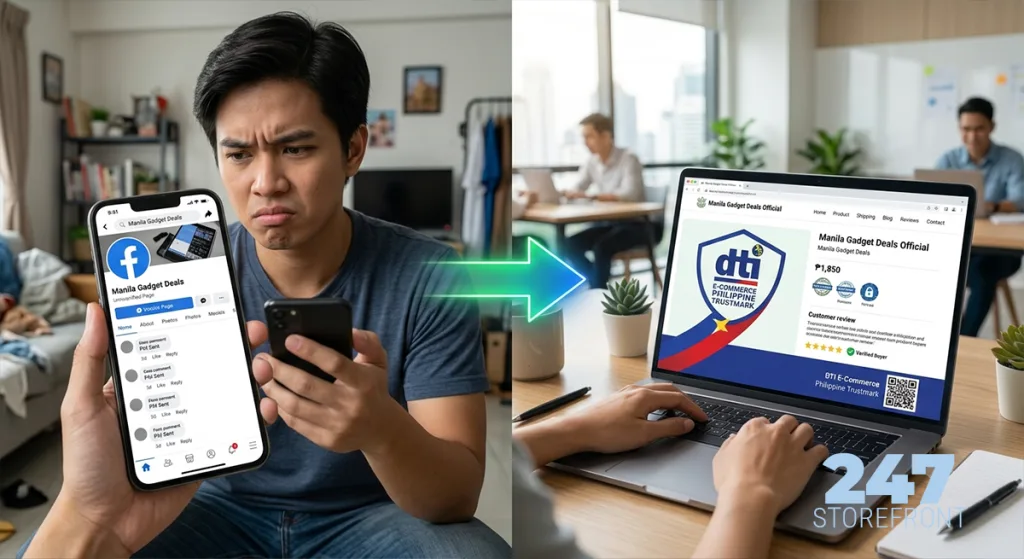
The DTI E-Commerce Philippine Trustmark
The Philippine government is actively stepping in to regulate online selling and protect consumers. Under the Internet Transactions Act of 2023 (Republic Act No. 11967), the Department of Trade and Industry (DTI) has launched the E-Commerce Philippine Trustmark.
This is a government-issued digital badge verifying that an online business complies with data privacy laws, taxation, and consumer protection standards. The Trustmark includes a unique QR code that redirects consumers to the official DTI database to confirm the business’s authenticity.
While displaying this Trustmark is voluntary, it is becoming the ultimate proof of legitimacy. You cannot easily integrate and verify these dynamic, government-backed Trustmarks on a standard social media post. Having a website allows you to proudly display this badge on your footer and checkout pages, giving you a massive advantage over unverified competitors.
Brand Ownership and Data Privacy
Filipino consumers are becoming highly protective of their personal data. They want to know their home addresses and phone numbers are safe. When you run transactions through unencrypted chat apps or public comment sections, you expose your customers to privacy risks and phishing scams.
When you use an official website with an active SSL certificate (the padlock icon in the browser), you control and encrypt the data. You provide a secure environment where customers feel comfortable entering their delivery details and payment information.
Common Mistakes That Destroy Online Trust
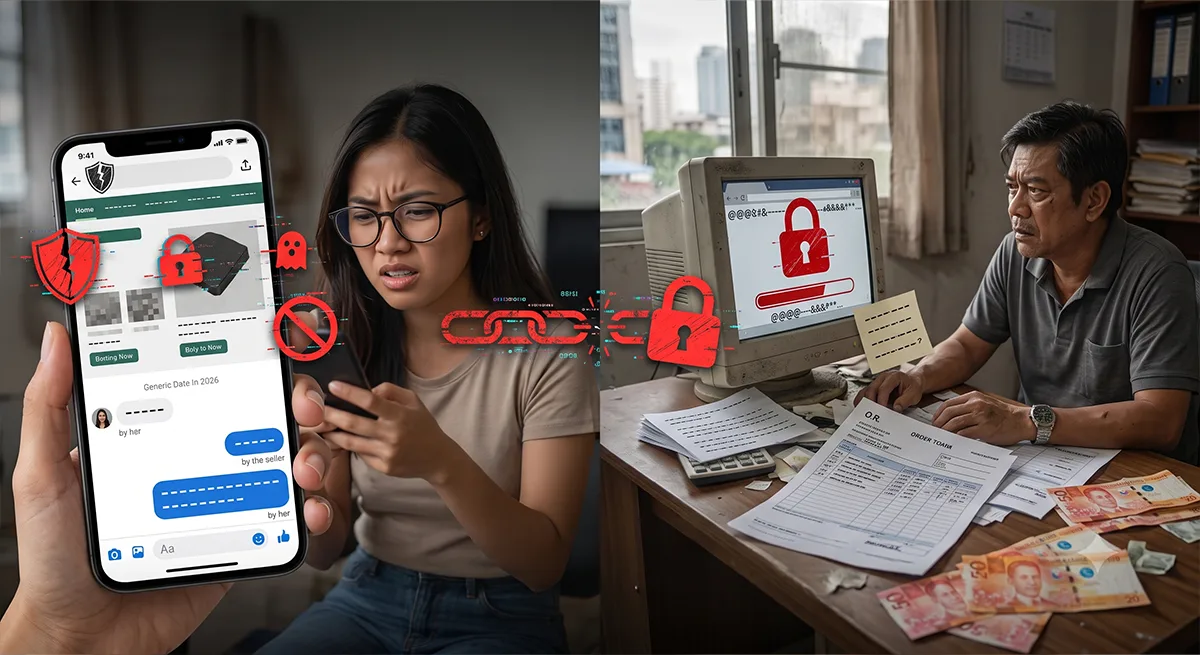
Even if you have a website, poor execution can still scare buyers away. Here are the most common trust-destroying mistakes I help clients fix:
- Hidden Pricing: Forcing people to message you for the price looks suspicious and frustrates modern buyers. Transparent pricing is non-negotiable.
- Broken Mobile Design: The vast majority of Filipinos shop using their smartphones. If your site has a broken layout on mobile devices, it looks abandoned and unprofessional.
- No Physical Address or Contact Info: Even if you operate purely online, hiding your contact details, email, or operational address is a major red flag. If you are transitioning a physical store online, displaying your real-world address heavily reinforces your legitimacy.
Trust Signals: Social Media vs. Official Website
| Trust Signal | Social Media Page | Official Website |
|---|---|---|
| Identity Verification | Easily faked or duplicated by scammers. | Verified through domain registrars and official hosting. |
| Payment Security | Relies on manual, unverified screenshots. | Encrypted gateways (PayMongo, Maya, Xendit). |
| Government Compliance | Difficult to display interactive DTI Trustmarks. | Can embed dynamic DTI Trustmarks and compliance links. |
| Data Privacy | Data is owned and tracked by the social platform. | You own the customer data securely under SSL encryption. |
Final Thoughts
Building a recognizable brand in the Philippines requires more than just a good product; it requires a secure, professional environment where customers feel safe spending their money. If you want to scale your local business nationwide, you have to move past the “PM sent” era.
An official website acts as your hardest-working sales employee. It verifies your identity, secures your customers’ data, and proves to the market that you are a serious, long-term business. Stop relying on rented social media space to build your credibility, and start investing in a digital storefront that actually earns your customers’ trust.
Frequently Asked Questions
Why do Filipino consumers prefer buying from websites instead of Facebook?
Websites offer a more secure and transparent buying experience. They provide clear pricing, verified customer reviews, transparent return policies, and secure, automated payment gateways, which significantly reduces the fear of online scams.
What is the DTI E-Commerce Philippine Trustmark?
It is a government-issued digital badge for online businesses that verifies their compliance with the Internet Transactions Act of 2023. It proves the business adheres to consumer protection, taxation, and data privacy laws.
Is having an SSL certificate important for my Philippine business website?
Yes. An SSL certificate encrypts the data transferred between your customer and your website. It displays a padlock icon in the browser, assuring customers that their personal details and payment information are safe from hackers.
How much does it cost to get a professional business website?
The cost of a website in the Philippines varies widely based on functionality. A basic professional brochure site can start around ₱15,000, while a fully custom e-commerce platform with payment integrations typically ranges from ₱80,000 to ₱250,000.
Do I need to display my physical address on my website?
Yes, it is highly recommended. Displaying a verifiable physical address, working phone numbers, and an official email address proves to skeptical buyers that you are a real entity that can be contacted if an issue arises with their order.