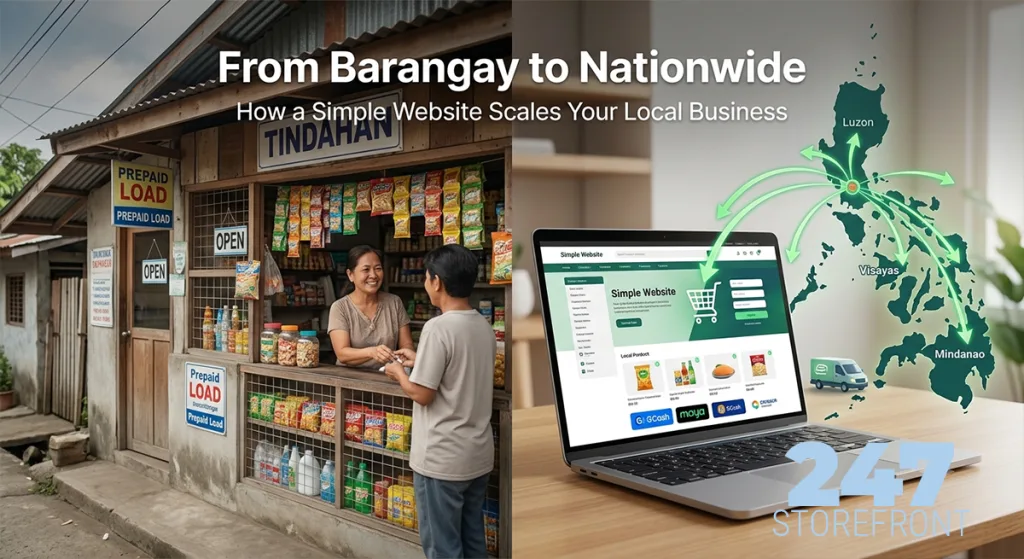
Most great Filipino businesses start exactly the same way: right in the neighborhood. You perfect a product, set up a small physical shop or a home-based operation, and start selling to your community. In the beginning, word-of-mouth is your best friend. Your neighbors buy from you, they tell their relatives, and soon you have a steady stream of local foot traffic.
But eventually, you hit an invisible ceiling. There are only so many people who live within a five-kilometer radius of your store. There are only so many customers willing to brave Metro Manila traffic or navigate provincial roads to visit your physical location.
Over the last 15 years, I’ve worked with dozens of business owners who felt completely stuck at this stage. They had an amazing product—whether it was custom-built furniture in Pampanga, artisanal coffee in Baguio, or specialized auto parts in Quezon City—but their revenue was capped because their reach was strictly limited by their geography.
The turning point for these entrepreneurs almost always involves a shift in how they view the internet. Moving away from a basic social media profile to a dedicated small business website Philippines is the exact mechanism that erases those geographical borders. Here is a practical breakdown of how a simple website fundamentally scales a local operation into a nationwide brand.
The Invisible Ceiling of Barangay-Level Business
Before we talk about expansion, we need to talk about the bottleneck. Operating strictly as a hyper-local business means your revenue is entirely dependent on two things: local foot traffic and operating hours.
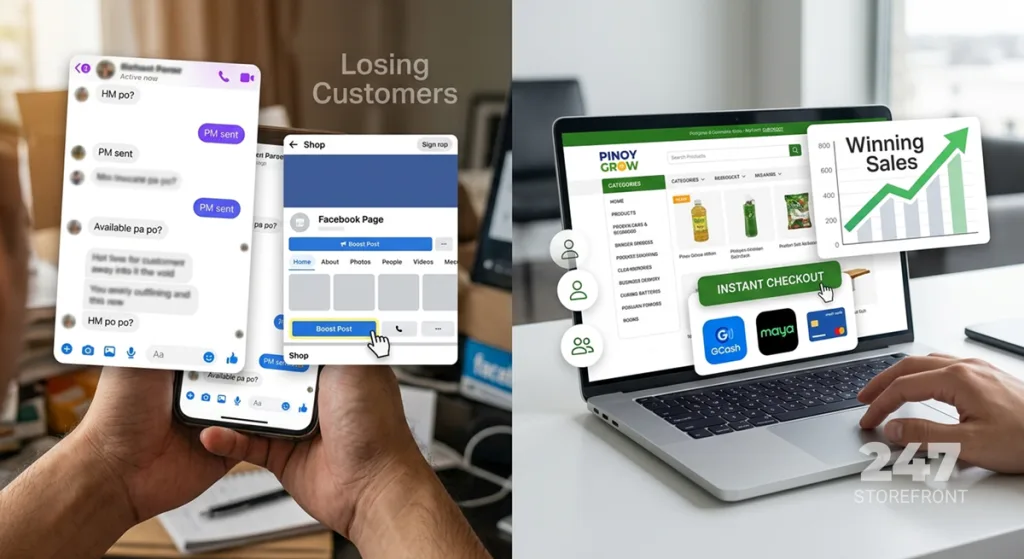
If there is a heavy typhoon and the streets are flooded, your sales drop to zero. If you close your shop at 6:00 PM, you cannot make money at 8:00 PM. Furthermore, when you rely purely on localized word-of-mouth or a basic website vs facebook page setup, you are forcing potential customers to conform to your manual processes. They have to message you during working hours, wait for an admin to reply with the pricing, and figure out their own way to pick up the item.
A website shatters this ceiling. It operates as a 24/7 digital branch of your business that never calls in sick, never closes for holidays, and can assist a customer in Aparri just as easily as a customer in Zamboanga.
Erasing the Map: How a Website Bridges the Islands
The Philippines is an archipelago of over 7,000 islands. Historically, shipping goods across these islands was a logistical nightmare reserved for massive corporations. Today, the infrastructure has completely changed, and your website is the bridge that connects your local inventory to the national grid.
When you integrate nationwide shipping e-commerce capabilities directly into your website, the physical distance between you and the buyer stops mattering.
Modern platforms allow you to connect directly with courier APIs. For example, by following the J&T Express VIP integration guidelines, a developer can set up automated shipping calculators on your checkout page. A customer in Cebu can add your locally made Manila product to their cart, and the website will automatically calculate the exact shipping fee based on weight and destination. You print the waybill, the courier picks it up from your barangay, and it flies across the country. No manual quoting required.
Building Trust with Buyers Who Have Never Met You
If I walk into your physical store, I can see your products, look you in the eye, and know that my money is safe. If I am sitting 500 kilometers away looking at a screen, that innate trust does not exist.
Filipino consumers are incredibly cautious about online scams, and rightly so. If you want to scale local business Philippines, you have to project undeniable credibility. A buyer in a different province needs to feel absolutely confident before they type in their credit card details or send a GCash transfer.
This is where a custom website does heavy lifting that a social media page simply cannot do:
- Professional Domain Name: Anyone can make a free Facebook page in three minutes. But when you buy domain Philippines extensions (.ph or .com.ph) through official registrars like the dotPH official registry, it signals to the market that you are an established, legally registered entity.
- Transparent Policies: A website allows you to publish clear Return Policies, Shipping Timelines, and Terms of Service. This transparency lowers buyer anxiety.
- Social Proof and Reviews: Dedicated product pages can host verified customer reviews, demonstrating that people across the country have successfully bought from you and loved the product.
Operational Scaling: Escaping the Manual Trap
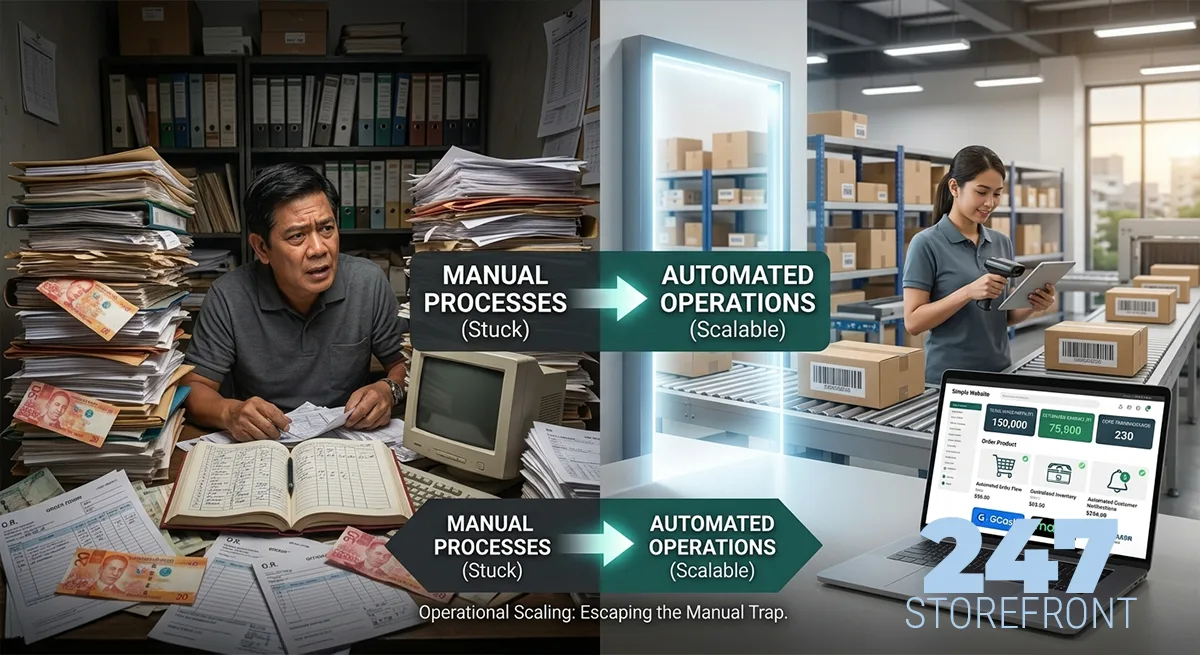
One mistake I often see ambitious local business owners make is trying to scale their marketing without scaling their operations. They run an ad, get 500 inquiries overnight, and their single customer service representative completely breaks down trying to answer “How much?” and “Do you ship to Iloilo?” manually.
A proper online store setup eliminates this manual trap. By moving your catalog online, you automate the entire sales cycle.
Instead of hiring five new employees just to answer chat messages, your website handles the friction. Customers can view high-resolution images, read the specifications, check current stock levels, and pay immediately. If you have integrated a secure payment gateway—and you have read up on how to handle PayMongo setup alongside the PayMongo API documentation—the money goes straight to your business bank account while you sleep.
3 Steps to Take Your Local Business Nationwide
If you are ready to expand your digital presence Philippines, here is the exact roadmap I use with my clients to transition them from a local powerhouse to a national brand.
Step 1: Dominate Your Immediate Radius First
Before you try to sell to the entire country, ensure you own your backyard digitally. Implement aggressive local SEO strategies. Following the Google Search Central guidelines for local businesses, ensure your website is optimized for local keywords (e.g., “best commercial bakery in Quezon City”). This builds a strong, high-converting foundation of local web traffic that funds your wider expansion.
Step 2: Choose the Right Infrastructure
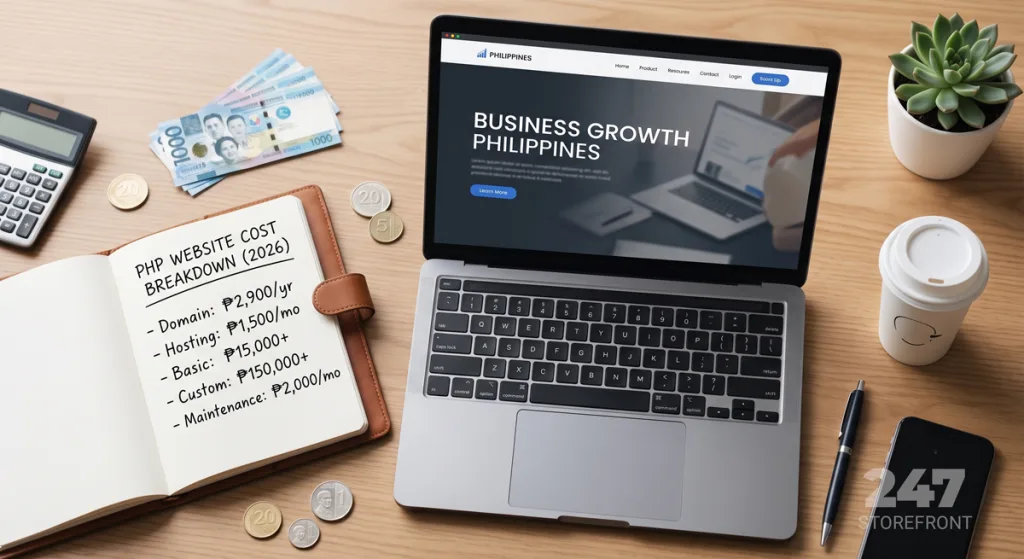
Don’t fall for the trap of thinking a massive custom build is your only option. You need to understand the realistic ecommerce website cost Philippines before you start. Decide if you need a fully custom coded platform or if you should be comparing Shopify vs WooCommerce for a faster launch. If you aren’t a technical founder, it is almost always more cost-effective to hire a professional web developer or agency to ensure the foundation is built securely.
Step 3: Centralize Your Inventory
If you are running a physical store and a nationwide website simultaneously, your inventory must be synchronized. Invest in a cloud-based Point of Sale (POS) system that connects directly to your website. When a local walk-in customer buys the last item on your shelf, your website should instantly mark it as “Out of Stock” to prevent a nationwide customer from buying a ghost item.
The Real Cost of Staying Local
Business owners are naturally careful with their capital. I frequently hear founders say they cannot afford to build a nationwide e-commerce website right now.
But look at the alternative. If you want to scale a physical business, your other option is to open a second branch. You have to pay commercial rent, renovate the space, hire a new manager, train new counter staff, and pay for secondary permits. That route easily costs millions of pesos and months of headaches.
In contrast, a high-performing website is effectively a flagship store that sits in the pocket of every single smartphone user in the Philippines. According to the DTI’s Philippine E-Commerce Roadmap, digital transactions in the country are growing at an unprecedented rate. Your customers are already comfortable buying online; they are just waiting for you to make it easy for them.
Final Thoughts
Scaling from a barangay-level operation to a nationwide business doesn’t require a massive corporate takeover. It requires accessibility. A simple, professionally designed website breaks down the walls of your physical store and puts your products in front of millions of potential buyers from Luzon to Mindanao. Stop limiting your excellent products to the people who can walk through your front door. Invest in your digital real estate, automate your sales, and watch your local business outgrow its borders.
Frequently Asked Questions
Do I need a DTI permit to sell nationwide through a website?
Yes. If you are operating a business in the Philippines, you should register your business name with the Department of Trade and Industry (DTI) for sole proprietorships, or SEC for corporations. Payment gateways and professional couriers will require these documents to open corporate accounts for your website.
How do I handle shipping for perishable local goods?
If you sell food or temperature-sensitive items, you cannot use standard nationwide couriers easily. Your website should be configured to restrict shipping to same-day delivery providers (like Lalamove or GrabExpress) based on specific Metro or provincial zip codes to ensure product quality.
Can a website automatically calculate shipping fees for different provinces?
Absolutely. By integrating local courier APIs (like LBC, J&T, or third-party aggregators like Shipmates) into your website, the system automatically checks the buyer’s shipping address and the product’s weight to provide a real-time, accurate delivery fee at checkout.
Is it better to hire a web developer or use a DIY platform?
If you have technical skills and time to spare, DIY platforms like Shopify can get you started. However, to fully integrate local Philippine payment gateways, custom shipping calculators, and ensure proper mobile optimization, hiring a professional web developer saves you significant time and prevents costly operational mistakes.
How do I get people from other provinces to find my website?
This is achieved through Search Engine Optimization (SEO) and targeted digital advertising. By optimizing your website for specific product keywords and running targeted Facebook or Google Ads geographically outside your local area, you can attract high-intent buyers nationwide.